
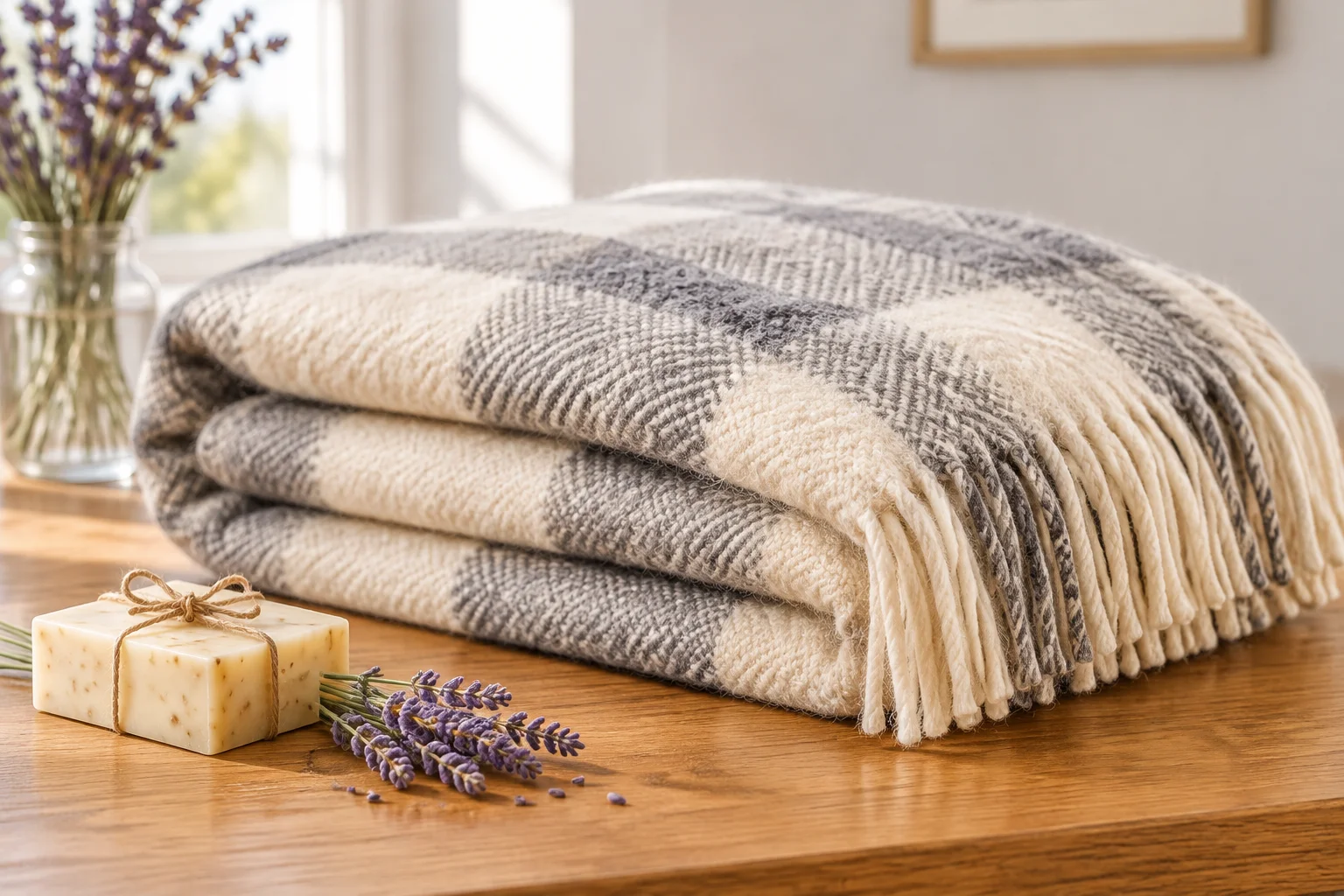
Understanding Natural Wool Fibers and Felting Risks
Natural wool possesses unique crimped structures protected by microscopic scales and an exterior lipid coating containing lanolin. These natural traits deliver remarkable thermoregulation, resist dust accumulation, and repel light surface liquids. However, the delicate scales easily interlock into a dense, stiff mat when exposed to thermal shock and excessive friction. That process creates irreversible shrinkage known as felting, which robs your heirloom blanket of its signature suppleness.
Routine washing is rarely necessary for genuine sheep or merino wool. Most odors and daily airborne particles release naturally if you hang the blanket across an outdoor railing on a crisp, breezy morning. Direct sunlight should remain brief to avoid brittleness, while shaded outdoor airflow revitalizes the loft. When genuine spills occur or a seasonal change calls for thorough cleaning, adopting gentle washing protocols protects the fibers from stress.
"Wool fibers naturally release odors and soil through gentle aeration; treating them with minimal water, neutral soap, and zero agitation keeps them lofty for decades."
Step-by-Step Washing and Gentle Drying Routine
When wet cleaning becomes necessary, hand washing in a large basin or clean bathtub remains the safest option. If you choose a front-loading machine, select an accredited wool cycle with unheated water and disabled spin cycles. Avoid standard household detergents with optical brighteners or harsh enzymes because they digest protein structures. Instead, use a mild pH-neutral wool cleanser containing lanolin to restore natural fiber moisture.
- Fill a wash basin with cool or lukewarm water strictly below 30°C (85°F) and dissolve a tablespoon of specialized wool cleanser thoroughly before submerging the fabric.
- Submerge the blanket gently, pressing down with flat palms for ten to fifteen minutes without rubbing, pulling, twisting, or wringing out the weave.
- Roll the saturated blanket inside thick dry cotton towels to absorb standing water before spreading it flat horizontally across a drying rack away from direct radiators.
Never hang a soaked wool blanket vertically from clips or clotheslines. The accumulated water weight stretches the wet yarns unevenly, distorting the borders and loose fringing. Once the blanket dries completely, store it folded in a breathable cotton or canvas zipper tote alongside red cedar blocks to deter seasonal textile moths.

Restored softness without any shrinkage
Great tips, my wool blanket looks brand new! I followed the cold water soak and towel rolling method, and there was zero shrinkage or felting. The lavender soap also left a subtle fresh scent.
Saved my camping blanket from campfire smoke
Very helpful article, thanks. I had stubborn camp smoke smell and mud spots on my wool blanket, and spot cleaning with diluted wool wash cleared it right up without stiffening the weave.